
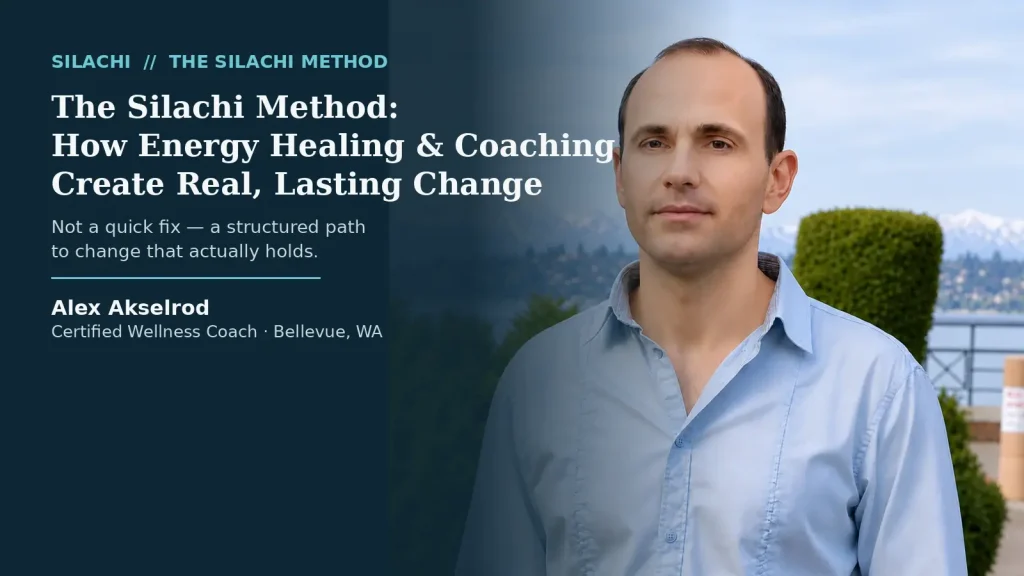
Last updated: 08/2026 By Alex Akselrod, Certified Wellness Coach & Burnout Recovery Specialist
Most burnout and stress relief advice offers a temporary reset — a technique that helps you feel better for a day, a week, maybe a month, before the same patterns creep back in. The Silachi Method was built differently. Rather than layering short-term coping tools on top of an unchanged underlying pattern, it combines structured coaching with energy healing to work at a deeper level — aiming not for a quick fix, but for change that actually holds up once the program ends.
Why Temporary Relief Isn’t the Same as Real Change
It’s easy to confuse feeling better in the moment with having actually changed something. A good breathing exercise can lower your stress response within minutes — genuinely useful, but not the same thing as addressing why your stress response gets activated so intensely and so often in the first place. The World Health Organization’s formal definition of burnout describes it as a state resulting from chronic workplace stress that has not been successfully managed — a description that hints at exactly this problem: most people aren’t lacking stress-relief techniques, they’re lacking a structured way to address the deeper, recurring patterns that keep regenerating the stress in the first place.
This is the core distinction behind the Silachi Method. It isn’t designed as a collection of isolated coping tools. It’s a structured, integrative approach where each element — coaching, breathwork, movement, and energy healing — works together toward change that’s meant to last well beyond the program itself.
What Makes Up the Silachi Method
Structured, Goal-Oriented Coaching
At its foundation, the Silachi Method includes evidence-informed coaching conversation focused on identifying the real, underlying patterns behind your stress or burnout — not just the surface symptoms. This draws on recognized coaching frameworks, similar to those outlined by the National Board for Health & Wellness Coaching, which emphasize self-determined goals and sustained behavior change over quick, externally-imposed fixes.
Breathwork and Mindful Movement
Guided breathwork and movement practices are woven throughout the method, engaging the body’s nervous system directly rather than relying purely on cognitive strategies. These practices create real, felt shifts in the moment — but within the Silachi Method, they’re used as a consistent practice built into your ongoing life, not a one-time technique meant to carry you through indefinitely on its own.
Energy Healing — Working at the Root, Not Just the Surface
This is where the Silachi Method most clearly departs from conventional stress-management approaches. Energy healing is a core part of the method — and unlike many quick-fix relaxation techniques, it isn’t used for temporary relief. It’s used to address deeper, root-level patterns, supporting change that’s designed to hold up over time rather than fading once the immediate stress of a difficult week has passed.
Drawing on Qigong and intuitive energy work, this component of the method looks beyond the immediate, situational sources of stress to the deeper patterns — often built up over years — that keep generating stress and depletion in the first place. The goal isn’t to help you feel calmer for an afternoon. It’s to work at a level where the change itself becomes part of how you’re wired to respond going forward, not something you have to actively maintain through constant effort alone.
Intuitive Assessment as the Starting Point
Every Silachi Method program begins with an energy and intuitive assessment, which identifies where imbalance is showing up most significantly for you specifically. This isn’t a one-size-fits-all program — the assessment ensures the coaching, breathwork, and energy healing components are actually targeted at your real patterns, rather than a generic sequence applied identically to every client.
Why “Lasting” Doesn’t Mean “Instant”
It’s worth being direct about what “real, lasting change” actually means, since it’s a meaningfully different promise than the instant transformation some wellness marketing implies. Change that holds up over time generally takes longer to build than change that simply feels good in the moment — that’s true of virtually any meaningful shift in a deeply ingrained pattern, whether physical, emotional, or energetic.
What the Silachi Method offers isn’t a guarantee of permanence — no coaching or energy-healing approach honestly can promise that, since life continues to bring new stressors and challenges regardless of how much foundational work has been done. What it offers is a structured process aimed at deeper, more durable change than a quick fix provides — building genuine resilience and new patterns, rather than temporary symptom relief that requires constant reapplication to maintain.
How This Differs From Generic Wellness Techniques
Most generic stress-relief content offers isolated techniques: a breathing exercise, a journaling prompt, a meditation app. These aren’t wrong, but used alone, they tend to function like a temporary patch — helpful in the moment, but disconnected from the deeper pattern generating the stress in the first place. Two things distinguish the Silachi Method from this kind of piecemeal approach:
It’s structured, not scattered. Rather than a list of disconnected tips, each part of the method — coaching, breathwork, movement, energy work — builds toward addressing the same underlying pattern, sequenced deliberately rather than applied randomly.
It works at the energetic and root level, not just the surface. This is the piece most conventional stress-management content misses entirely. Addressing surface symptoms without addressing the deeper pattern generating them tends to produce exactly the kind of short-lived relief that leaves people cycling back through the same stress and burnout patterns repeatedly.
Who the Silachi Method Is Designed For
The Silachi Method underpins all of Silachi’s coaching programs, and applies across several specific situations:
Tech professionals dealing with chronic burnout, particularly those navigating the demands of major employers like Microsoft and Google, where the always-on culture tends to regenerate stress faster than surface-level coping techniques can offset.
Executives and senior leaders seeking a more foundational approach than typical productivity-focused executive coaching, through Silachi’s executive coaching programs.
Couples navigating burnout’s effects on their relationship, where couples-focused coaching applies the same integrative approach to relational patterns, not just individual stress.
Anyone seeking a more holistic path, beyond burnout specifically, through the broader holistic life coaching approach built on the same underlying method.
What a Program Built on the Silachi Method Looks Like
A typical engagement — whether the concentrated Breakthrough Session or a longer structured program outlined on the services page — generally moves through a few phases:
Early stage: stabilizing. Initial sessions focus on addressing the most acute stress and beginning to shift the nervous system out of chronic activation, often using breathwork and an introduction to the method’s energy-based techniques.
Middle stage: root-level work. This is where the energy healing component does its deepest work — moving beyond surface symptom management toward the underlying patterns that have been generating stress, sometimes for years.
Later stage: integration. The final phase focuses on building the changes into your ongoing life in a way that doesn’t depend on continued sessions to maintain — the point at which “lasting” actually becomes something you can observe in daily life, rather than something promised on a website.
A Grounded, Honest Look at What to Expect
It’s worth setting realistic expectations rather than an idealized picture: the depth of change the Silachi Method aims for generally takes real, sustained engagement — not a single session, and not passive participation. Clients who see the most durable results tend to be the ones who engage consistently with each part of the method, including the energy-healing component, rather than treating any single piece as the whole solution.
It’s also worth being clear that “energy healing” and “energy work” describe an approach rooted in practices like Qigong rather than a claim of medical treatment. The Silachi Method is designed to complement, not replace, appropriate medical or mental health care when those are genuinely needed — a distinction worth understanding clearly before beginning any program.
Frequently Asked Questions
What specifically makes energy healing different from a relaxation technique? Relaxation techniques generally address the immediate stress response in the moment. The energy healing component of the Silachi Method is aimed instead at deeper, root-level patterns — the goal is durable change in how you respond to stress over time, not just momentary relief.
How long does it take to see lasting results? This varies by individual and by how long-standing the underlying patterns are, but most clients engage in a structured, multi-session program rather than a single session, since lasting change generally requires sustained work rather than a one-time intervention.
Is energy healing evidence-based? Energy healing practices like Qigong draw on a long tradition and increasingly some research interest, though they operate differently from conventional medical treatment and shouldn’t be understood as a clinical or diagnostic practice. It’s offered within the Silachi Method as a complementary approach alongside coaching, not a substitute for medical or psychological care.
Can the Silachi Method be combined with therapy or medical treatment? Yes — it’s designed to work alongside conventional medical and mental health care, not replace it, particularly for anyone managing a diagnosable clinical condition.
Is a single Breakthrough Session enough for lasting change? A single session can create meaningful relief and momentum, but the deeper, more durable change the method aims for generally comes from continuing into a fuller structured program afterward.
Do I need to believe in energy healing for it to be part of my program? Not necessarily, though an open, willing approach tends to help. Many clients come in skeptical of the energy-healing component specifically and find the structured coaching and breathwork elements valuable regardless of their views on the energy work itself.
Ready to Experience the Difference?
If you’ve tried quick-fix stress relief before without lasting results, the Silachi Method offers a genuinely different, more structured path — one built around real, durable change rather than another short-term technique to add to a list.
Learn more about the full Silachi Method, explore Alex Akselrod’s background and approach, or schedule a free consultation to talk through what a program built on real, lasting change could look like for your specific situation. Questions before then? Reach out through the contact page.
Further reading: World Health Organization – Burn-out an “occupational phenomenon” | National Board for Health & Wellness Coaching
About the Author
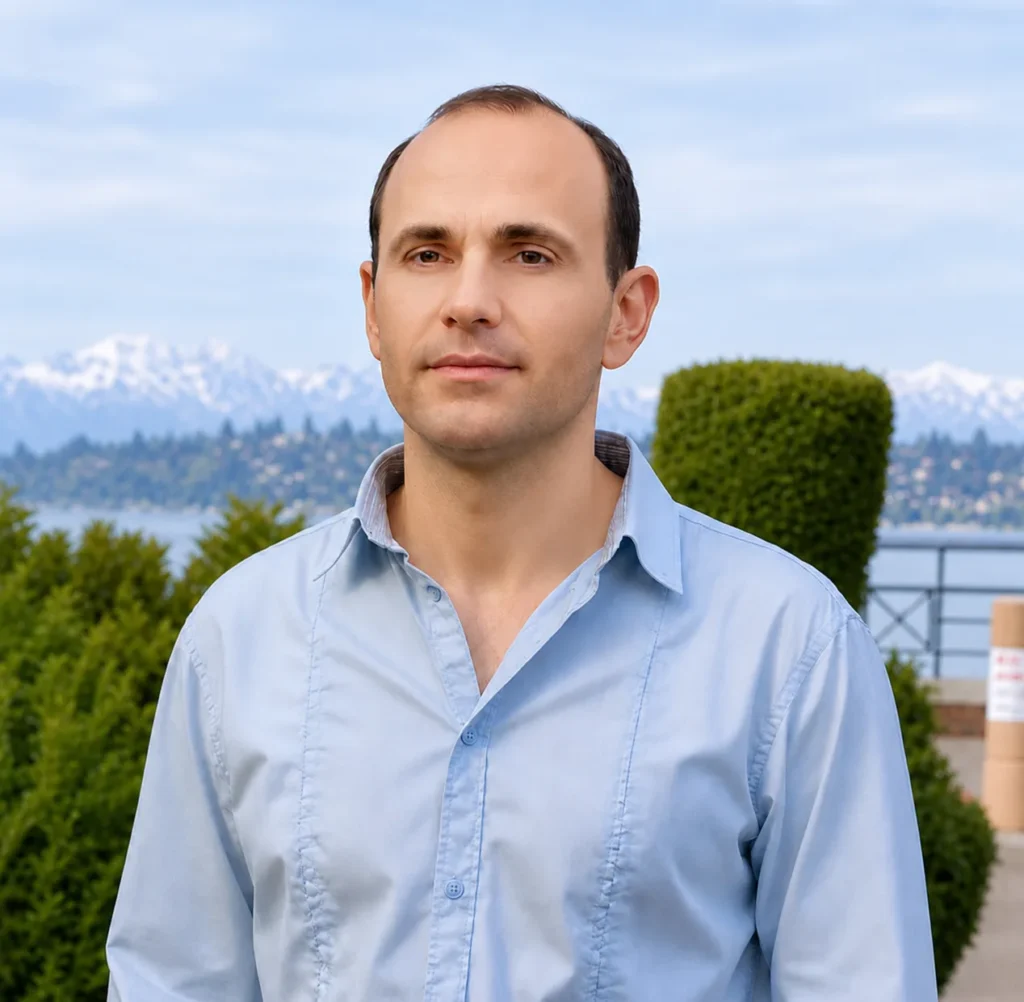
Alex Akselrod is the founder of Silachi and a certified wellness coach based in Bellevue, WA, with 15 years of experience helping clients recover from burnout, reduce chronic stress, and build lasting wellbeing using the integrative Silachi Method. A Qigong teacher and Advanced ThetaHealer®, Alex works with individuals and couples across the Eastside to help them create change that holds up over time.