
Last updated: 07/2026
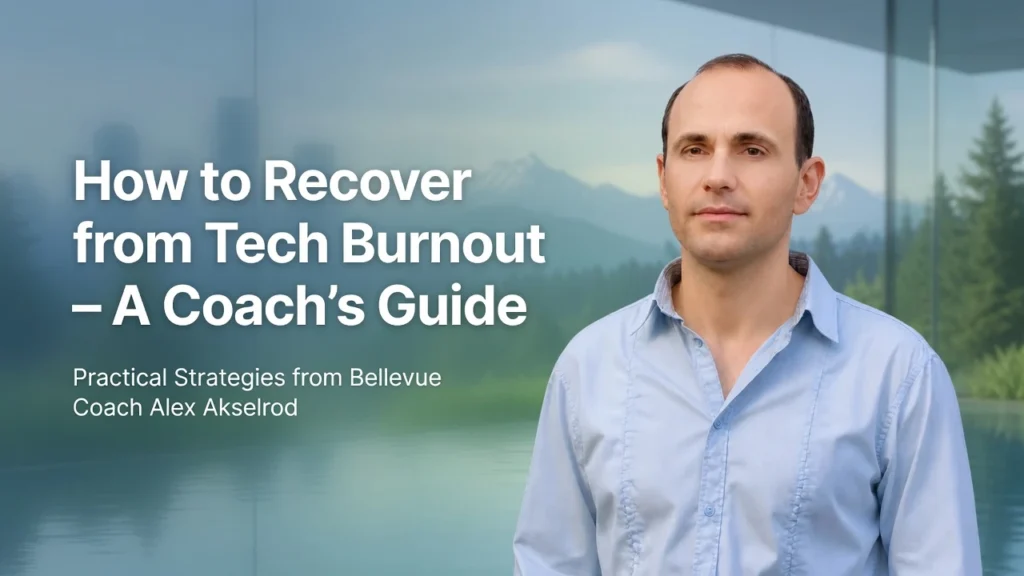
By Alex Akselrod, Certified Wellness Coach & Burnout Recovery Specialist
If you’re a tech professional in Bellevue, Redmond, or the greater Seattle area — working at Microsoft, Amazon, Google, or a startup — and you feel constantly drained, unmotivated, and disconnected, you are not alone. Tech burnout has become an epidemic.
As a burnout recovery coach with over 15 years of experience helping high-performing tech leaders, I’ve guided hundreds of professionals out of burnout. The good news is that full recovery is absolutely possible — and often faster than people expect when you address the root causes.
In this comprehensive guide, I’ll show you exactly what tech burnout is, how to recognize it, and a proven step-by-step process to recover your energy, clarity, and passion for work.
What Is Tech Burnout?
Tech burnout is a state of chronic physical, emotional, and mental exhaustion caused by prolonged stress in demanding tech environments. It goes far beyond normal tiredness.
Common contributing factors include:
- Always-on culture and constant notifications
- Rapid context switching and tight deadlines
- Pressure to continuously innovate and deliver
- Lack of work-life boundaries
External resource: Mayo Clinic – Job Burnout
Common Signs of Burnout in Tech Professionals
Look for these warning signs:
- Persistent fatigue that rest doesn’t fix
- Emotional exhaustion and cynicism toward work
- Brain fog and reduced focus
- Sleep problems and frequent illness
- Loss of motivation and dread about opening Slack or email
- Feeling detached from your own career goals
If several of these sound familiar, it’s time to take deliberate action.
Why Most Burnout Advice Doesn’t Work for Tech Workers
Generic advice like “just take a vacation” or “do more self-care” rarely creates lasting results. Why? Because tech burnout often involves nervous system dysregulation, perfectionist patterns, and workplace cultures that reward overwork.
Real recovery requires a deeper, more structured approach.
The Silachi Recovery Framework: 5 Phases
Phase 1: Stabilization – Stop the Bleed (Weeks 1–2)
Focus on immediate nervous system calming and basic boundaries.
Try this today: 4-7-8 breathing technique (inhale 4 seconds, hold 7, exhale 8). Practice for 5 minutes when stress rises.
Learn more about the Silachi Method
Phase 2: Root Cause Discovery (Weeks 2–4)
Uncover the deeper patterns (perfectionism, people-pleasing, identity tied to productivity, etc.) that keep you stuck.
Phase 3: Energy Restoration (Weeks 4–8)
Rebuild your energy through breathwork, mindful movement, emotional release, and mindset work.
Phase 4: Reintegration & Healthy Boundaries
Bring your renewed energy back into work without slipping into old habits. Learn how to communicate boundaries effectively.
External resource: Harvard Business Review – To Recover from Burnout, Regain Your Sense of Control
Phase 5: Maintenance & Prevention
Shift to lighter support (often once per month) to protect your progress long-term.
Daily Tools That Actually Work
- Breathwork – Fastest way to shift out of fight-or-flight
- Mindful Movement / Qigong – Releases stored tension
- Journaling prompts – “What am I protecting by overworking?” and “When do I feel most alive?”
- Energy audits – Track what drains you vs. what energizes you
Real Results from Tech Clients
Many of my clients from Microsoft and other tech companies report major improvements in energy, sleep, mood, and career clarity within the first 4–8 weeks.
Preventing Burnout Long-Term
- Set non-negotiable recovery time
- Build a strong support system
- Align your work more closely with your values
- Regular check-ins with your energy levels
When to Get Professional Support
If you’ve been struggling for months, working with a specialized burnout recovery coach can dramatically speed up your progress and help you avoid repeating the same cycle.
At Silachi in Bellevue, we specialize in helping tech professionals recover using a blend of coaching, breathwork, and holistic methods.
Ready to start your recovery? Schedule a Discovery Call
About the Author
Alex Akselrod, Certified Wellness Coach and Burnout Recovery Specialist

Alex Akselrod is the founder of Silachi and a certified wellness and life coach based in Bellevue, WA, with 15 years of experience helping clients overcome burnout, chronic stress, and low energy using the integrative Silachi Method. A Qigong teacher, Advanced ThetaHealer®, and published author. Alex has worked with hundreds of high-performing tech professionals — including many at Microsoft — to help them rebuild sustainable, energized careers.